How Treatment Works at IsraRehab: A Long Program, the Family and Life After Rehab
A radio interview recorded against the backdrop of news about fentanyl deaths. Viacheslav Sviadish explains why IsraRehab relies on long-term treatment far from home, what determines the length of the program, what the aftercare program in the US offers and why the family has to step in first.
Radio show, Davidzon Radio (New York)
Videos are in Russian. Turn on subtitles (CC) → Settings → Auto-translate → English.
Timestamps
Key points in a minute
- The main danger of synthetic drugs like fentanyl is that nobody knows their composition or strength, so the dose cannot be controlled.
- Treating addiction is a long, resource-intensive process: the family is involved, and the conditions for it have to “ripen.”
- Viacheslav believes it is better to get treatment far from home: there is less chance of running away from the program and going back to the old life.
- In his experience, after short programs — detox or a course of a few weeks — most young people start using again.
- The IsraRehab program is designed for 6–12 months on average; if a person resists treatment, it takes longer.
- A mature adult who “broke down” in a crisis and a teenager who has been using since 12–14 need completely different work: the teenager has to go through every stage of becoming a person.
- After rehab, graduates from the US get help with jobs, education, savings and adjusting to life during the first year.
Summary
Fentanyl: why synthetic drugs kill
The show opens with news about the rise in overdose deaths, most of which are linked to fentanyl, including in mixtures with other drugs. Viacheslav shares the host’s alarm: the problem with a synthetic drug is that nobody knows what is in it or in what concentration, which means the dose cannot be tracked. According to him, the same applies to other synthetic chemical substances.
He stresses that the problem is not limited to the US: he sees a similar picture in Israel and other countries, and it is not only about street drugs but also psychotropic and prescription medications. Most often it is young people who die — people who have not yet had a chance to see anything or show what they can do in life.
Treatment takes a long time, and it starts with the family
According to Viacheslav, people addicted to synthetic drugs are very hard to treat. It takes a whole complex of work that involves the family, and the conditions for treatment have to “ripen.” The process is long and requires substantial resources.
The first step, he says, is for the family to step in. Someone who uses fentanyl finds it very hard to “hit the brakes” on their own and say they want treatment. So the people close to them need to turn to specialists and look for ways to help. The host also recalls an idea he shared long ago: it is not about a “complete cure” — the right word is recovery, which can last for decades but comes with no guarantees.
Why it is better to get treatment far from home
Viacheslav is convinced that a patient is better off being treated far from home, “across the ocean”: there they have fewer chances to run away and relapse, and they can be put back on their feet gradually, step by step. He makes it clear that he does not think the US lacks effective treatment or good programs. But for many young people who use fentanyl, including those from immigrant families, getting away from their usual surroundings gives them a better chance.
From his many years of experience he describes a picture many families know well: a person goes to detox or a short program of a few weeks or months, comes back — and starts using again. In his view, the people who can succeed in treatment close to home are mainly those who are highly motivated and want it themselves.
What happens after rehab
Asked what is new, Viacheslav talks about the branch in Cyprus and explains that in the US there is not yet a rehab facility but an aftercare program for those who completed treatment in Israel. At the time of the show it had been running for about a year and a half.
Graduates get help finding work and adjusting to society, and they are supported during the first year after rehab. There are savings programs so that a person puts money aside and can later, for example, start their own business; help with education is available if needed. At the same time, Viacheslav stresses, nobody solves every adjustment problem for them: patients go through this path themselves, but with support.
In addition, the team in the US can carry out interventions — building a person’s path from refusing to go to treatment to the moment they actually go — and escort them to Israel or Cyprus. Online consultations with specialists are also available, including therapists and a psychiatrist.
Addiction and mental health: not just pills
Viacheslav talks separately about people who have psychiatric problems in addition to addiction. He links the growing number of such requests to the general background — armed conflicts, aggression, negative emotions: many people look for a solution in substances and alcohol.
According to him, the approach of the center’s specialists differs from the common reliance on medication alone. If medication is needed, it goes hand in hand with therapy that looks for the root of the problem. The goal is not just to relieve symptoms with a drug, but to get to the heart of the matter so that, over time, the person does not need to keep taking psychotropic medication.
How long the program lasts and why it varies
The program accepts people from the age of 18. In theory it is designed for 6–12 months, but the length depends on the person: their personality, motivation and resistance. As long as a person resists the program, their stay is extended — some people stay for a year and a half or two years. Viacheslav compares it to a journey from point A to point B: you cannot announce that someone has completed the program just because six months have passed.
It also matters who is being treated for what. An adult who started drinking at a mature age and has already made something of their life is easier and faster to help. It is a completely different story with a young person who smoked synthetic marijuana from the age of 12 and moved on to fentanyl at 14: they have no life skills and have to go through every stage of becoming a person. That is why there is no single standard: each stage is discussed with the family in advance, and they are told from the start that the program will be long. Short-term programs, Viacheslav believes, can help mature adults after a life crisis, but for young people who have been using for most of their lives they usually bring no results.
The summary is based on the recording and retells the main ideas in our own words. The video reflects the author's personal experience and views; it is not medical advice. Viacheslav Sviadish is an addiction recovery specialist, not a doctor.
Frequently asked questions
How long does the treatment program at IsraRehab last?
According to Viacheslav, 6–12 months on average, but the length depends on the person: their motivation, personality and how much they resist treatment. Sometimes the stay is longer. The specific plan is discussed with the family individually.
From what age does the program accept people?
On the show, Viacheslav names the age of 18 and over.
Why are short programs and detox not enough?
In Viacheslav’s experience, young people often go back to using after short courses; short programs are better suited to mature adults who already have life skills. It is best to discuss which format fits your situation with a specialist.
What is an aftercare program?
It is support after the main treatment ends: help with work, education, savings and adjusting to society during the first year. On the show, it refers to such a program in the US for graduates who completed treatment in Israel.
Recognise your situation?
The first consultation is free. Tell us what is happening and we will work out where to start in your case.
More videos
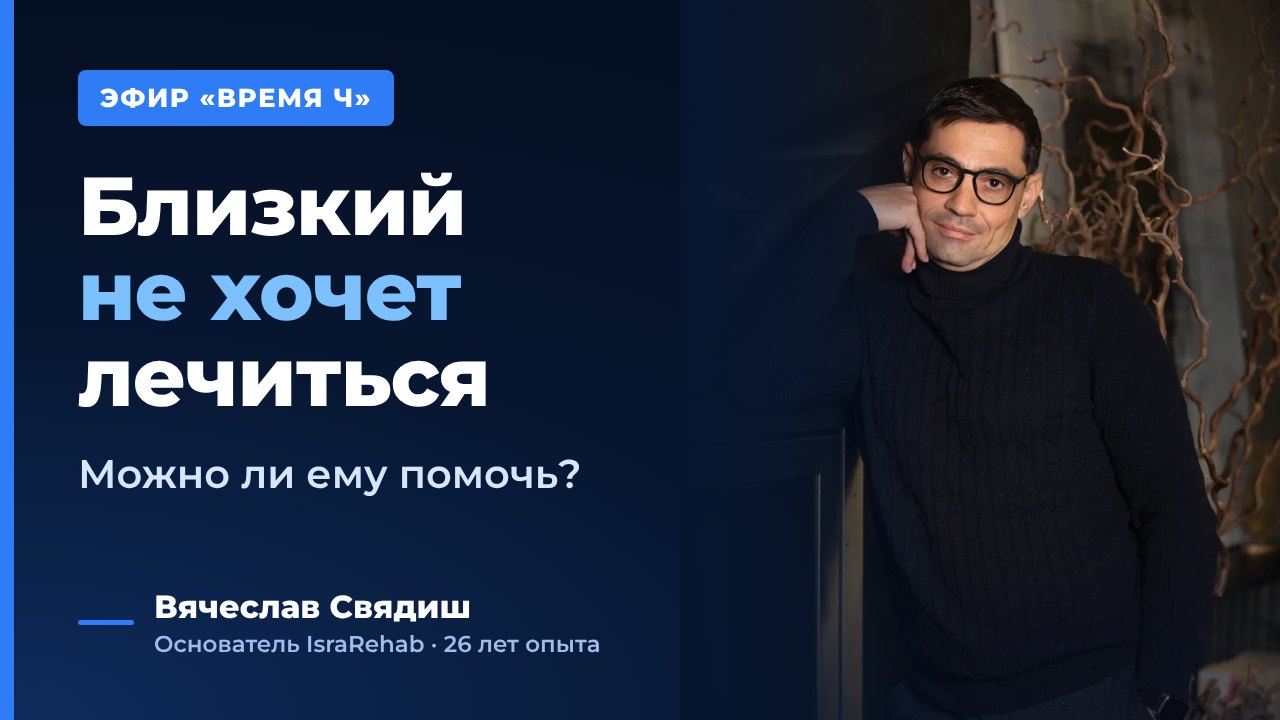 23:40
“Vremya Ch” radio show, Radio Freedom FM 104.7 (New York)
He doesn’t want treatment
A broadcast about the most common situation: the family is in despair, but the person himself doesn’t want treatment. Viacheslav Sviadish explains why a person with addiction doesn’t see the problem, why the key to change lies with the family, and what really helps nudge someone toward the first step.
Watch →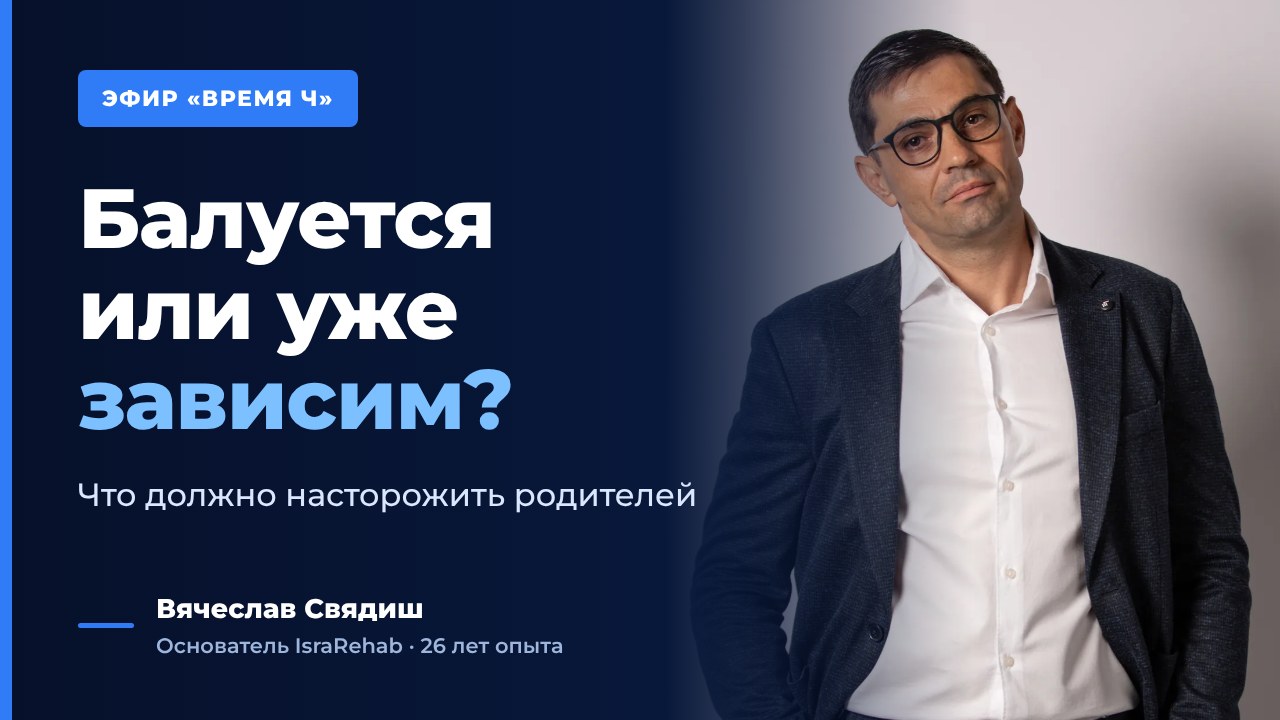 19:52
“Vremya Ch” radio show, Radio Freedom FM 104.7 (New York)
Fooling around or addicted?
The first broadcast in a series about addiction in New York’s Russian-speaking community. Viacheslav Sviadish talks about who is at risk, the danger of “legal” weed of unknown quality, which signs should alert parents, and why help is needed not only by the person with addiction but by the whole family.
Watch →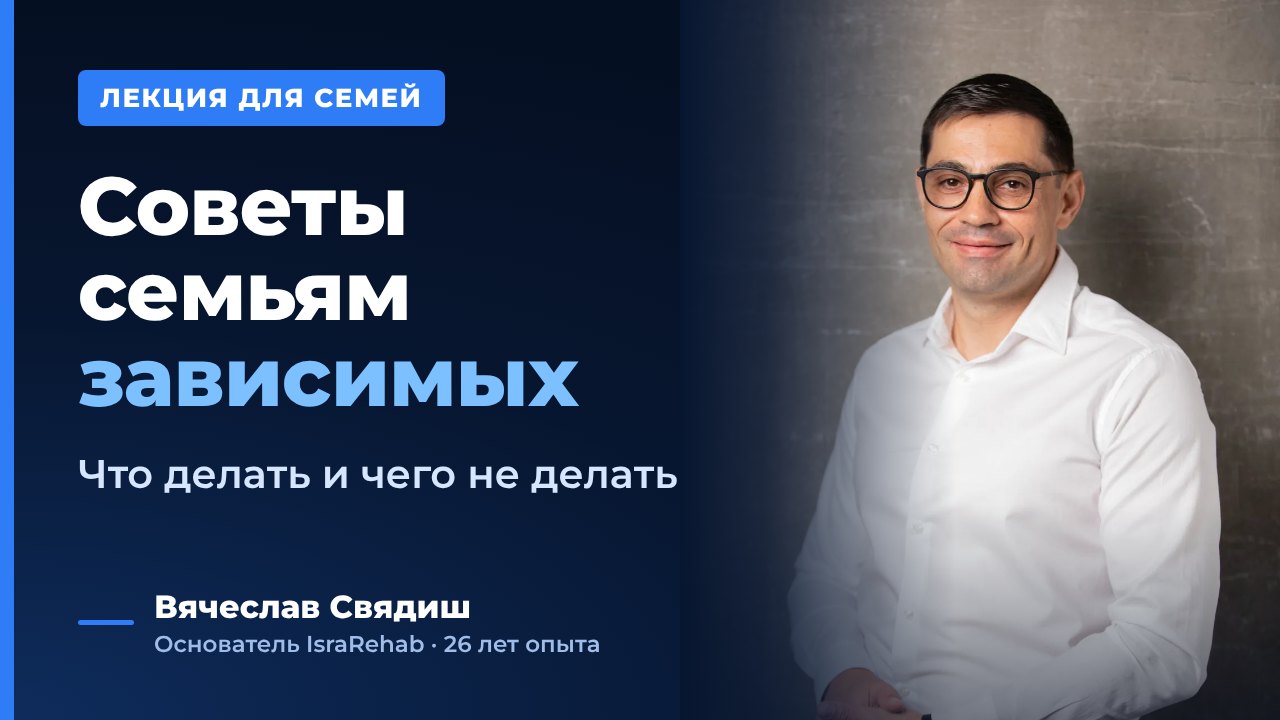 1:00:26
Lecture for families of people with addiction
Advice for families
A lecture for families of people addicted to drugs or alcohol. Viacheslav Sviadish speaks directly and without consolation: who should bear the consequences of using, why you must not live someone else’s life, and why the family needs help of its own.
Watch →