Signs of drug use in a teenager or adult and what to do
The clearest sign that a teenager or adult is using drugs is not one change but a combination: sudden new friends and secrecy, lies, missing money or belongings, disrupted sleep and appetite, changes in pupils or speech. If you see this, don't wait and don't interrogate: gather the facts, talk calmly and get professional advice. If you see signs of an overdose, call emergency services at once — in Israel, 101.
Signs of drug use in a teenager or adult
- A sudden change of friends, new people they won't tell you anything about
- Lies and secrecy: a locked door, passwords on everything, disappearing at night
- Money, valuables or medicines from the family cabinet go missing
- Big mood swings: from excited and talkative to sluggish and flat
- Disrupted routine: awake all night or sleeping all day, eating a lot or barely at all
- Very small or very large pupils, red eyes, slurred speech, an unfamiliar smell
- Falling grades or work performance, losing interest in sport and hobbies
- Odd finds: foil, straws, syringes, small zip bags, unfamiliar pills
What parents and loved ones can do
What to do
- Write down the facts: what, when, how much money went missing — facts are harder to deny
- Talk when they are sober, one to one, from a place of care: "I can see… and I'm scared for you"
- With a teenager: agree on one line with the other parent, and set clear rules and consequences
- If your child is under 18, the decision to get help is yours — don't wait for them to be "ready"
- Limit access to cash and valuables, and remove medicines that could be misused from the house
- Get a family consultation — before the conversation, not after a blow-up
What not to do
- Don't interrogate or shout — a teenager will shut down, an adult will deny everything
- Don't hand over money "for food" or "to pay someone back", and don't pay off their debts
- Don't hide the problem from the other parent or your partner
- Don't tell yourself "it's just a phase" — experimenting can turn into addiction
- Don't threaten the police or throwing them out unless you are ready to follow through
How drug addiction is treated
Treatment starts with a medical assessment: which substances, for how long, and whether there are other mental health problems such as depression, anxiety or psychosis. Then comes detox, usually 5 to 14 days depending on the substance, under medical supervision. At IsraRehab the medical side — detox, psychiatry and prescriptions — is handled by licensed staff under our medical director, a psychiatrist.
Detox is not treatment. It is preparation for treatment. Next comes an inpatient programme of 30 to 90 days or longer, built on the Full Return Method: cognitive behavioural therapy teaches the person to recognise triggers, existential work answers the question of what to stay clean for, and the 12-step programme gives a community for years to come. The body recovers through exercise, sleep and nutrition.
With teenagers and young adults, what happens at home and around them matters even more: old friends, free time, school or college. So parents do their own part of the work — rules, boundaries, how to talk — and after discharge we help the young person back into study or work.
After the programme comes at least 12 months of aftercare. A relapse doesn't mean everything was wasted: what matters is getting back to the plan quickly, understanding what led to it and strengthening the weak spot.
Consultations for families →
What to do when your husband drinks, your son uses, and every attempt to help only makes it worse.
Treatment at IsraRehab ↗
If detox or inpatient care is needed, treatment takes place at the licensed IsraRehab centre under medical supervision.
Overdose signs: when to call an ambulance
- They don't respond, can't be woken, or breathing is slow, noisy or irregular — call emergency services (101 in Israel); if they are breathing, put them on their side and stay with them
- Blue or grey lips and fingertips, pinpoint pupils — a possible opioid overdose
- Chest pain, very high temperature, seizures or extreme agitation after stimulants
- Psychosis: hallucinations, paranoia, aggression, danger to themselves or others
- Talk of suicide, goodbye messages, giving belongings away
Frequently asked questions
How can I tell if my teenager is using drugs?
Look for a combination of signs, not just one: new friends and secrecy, missing money, mood swings, disrupted sleep, changes in pupils, falling grades. Teenage moodiness on its own isn't a diagnosis, but if several signs appear and last for weeks, it's time to talk and get advice.
What should I do if I find drugs in my child's room?
Don't explode on the spot. Calm down, agree on an approach with the other parent and talk when your child is sober: about what you found, about your fear and about the rules that now apply. Then get professional advice and, if needed, a medical assessment.
My adult son uses drugs and refuses treatment — what can I do?
You can't force an adult, but you can stop supporting the drug use — with money, unconditional housing or cover stories. A family consultation helps you set boundaries, and if needed we prepare an intervention: a conversation after which the person agrees to treatment.
Can someone fully recover from drug addiction?
Addiction is a chronic condition, but lasting recovery is real: many of the people I have worked with have lived drug-free for years. The key is not to stop at detox — a full programme, family work and at least 12 months of aftercare.
Is it confidential?
Completely. Information about your family is not shared with anyone — not the school, not an employer. The only exception is a direct threat to life. The first consultation is free.
Related: videos
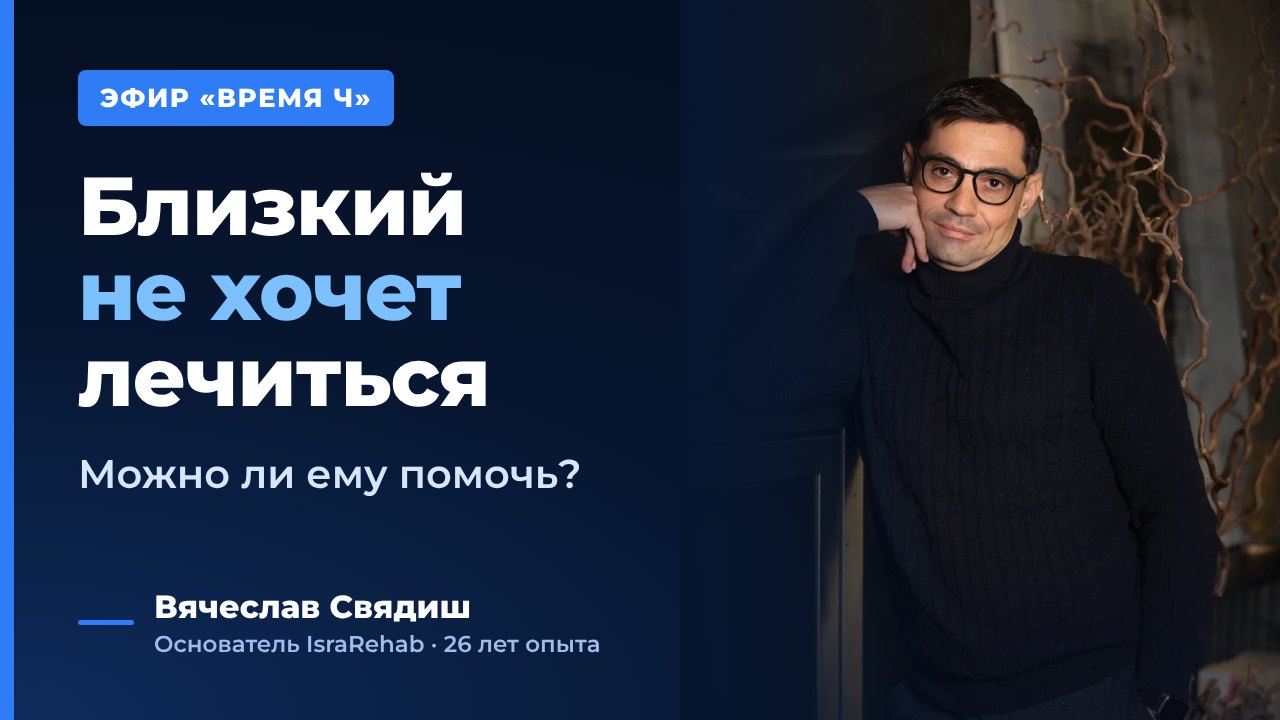 23:40
“Vremya Ch” radio show, Radio Freedom FM 104.7 (New York)
He doesn’t want treatment
A broadcast about the most common situation: the family is in despair, but the person himself doesn’t want treatment. Viacheslav Sviadish explains why a person with addiction doesn’t see the problem, why the key to change lies with the family, and what really helps nudge someone toward the first step.
Watch →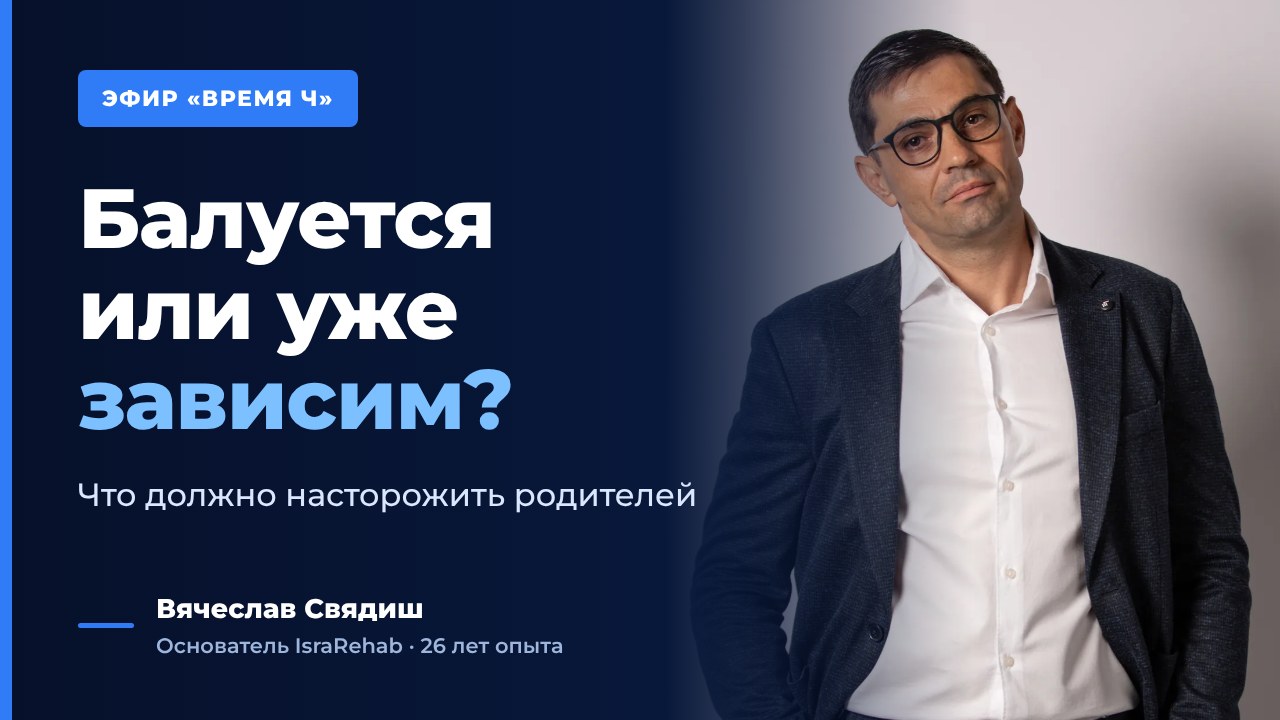 19:52
“Vremya Ch” radio show, Radio Freedom FM 104.7 (New York)
Fooling around or addicted?
The first broadcast in a series about addiction in New York’s Russian-speaking community. Viacheslav Sviadish talks about who is at risk, the danger of “legal” weed of unknown quality, which signs should alert parents, and why help is needed not only by the person with addiction but by the whole family.
Watch →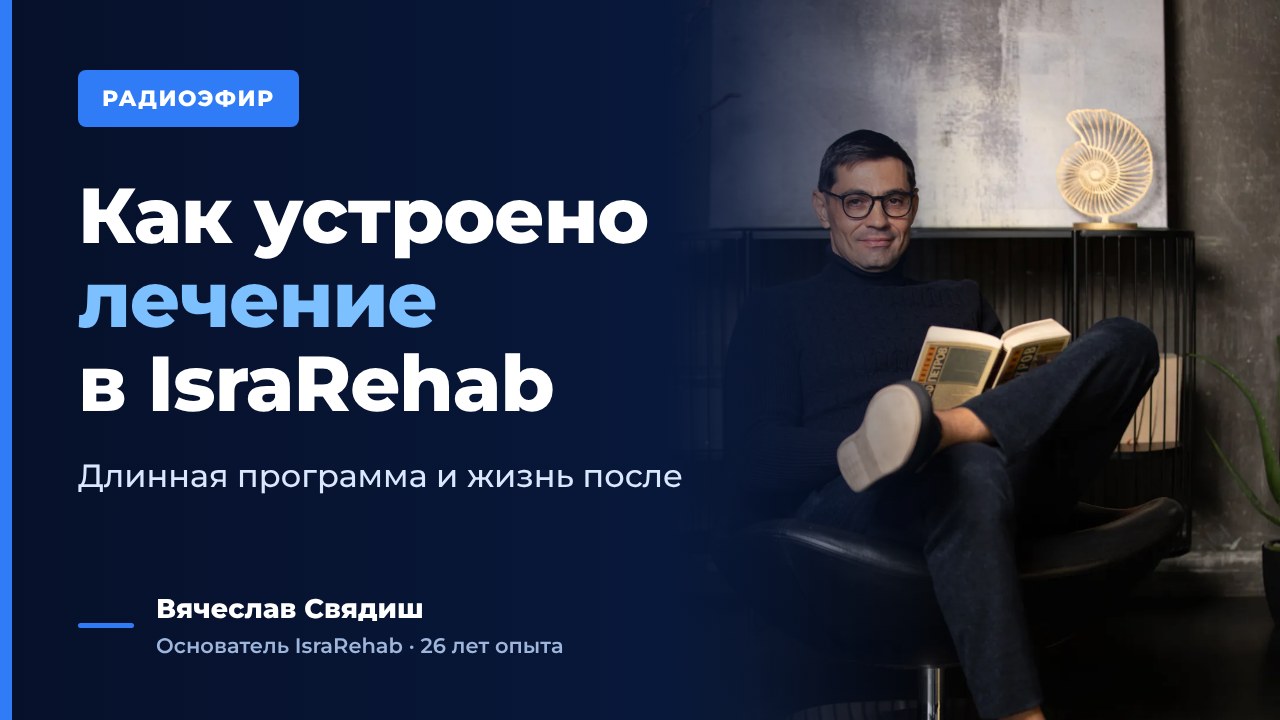 23:29
Radio show, Davidzon Radio (New York)
How treatment works at IsraRehab
A radio interview recorded against the backdrop of news about fentanyl deaths. Viacheslav Sviadish explains why IsraRehab relies on long-term treatment far from home, what determines the length of the program, what the aftercare program in the US offers and why the family has to step in first.
Watch →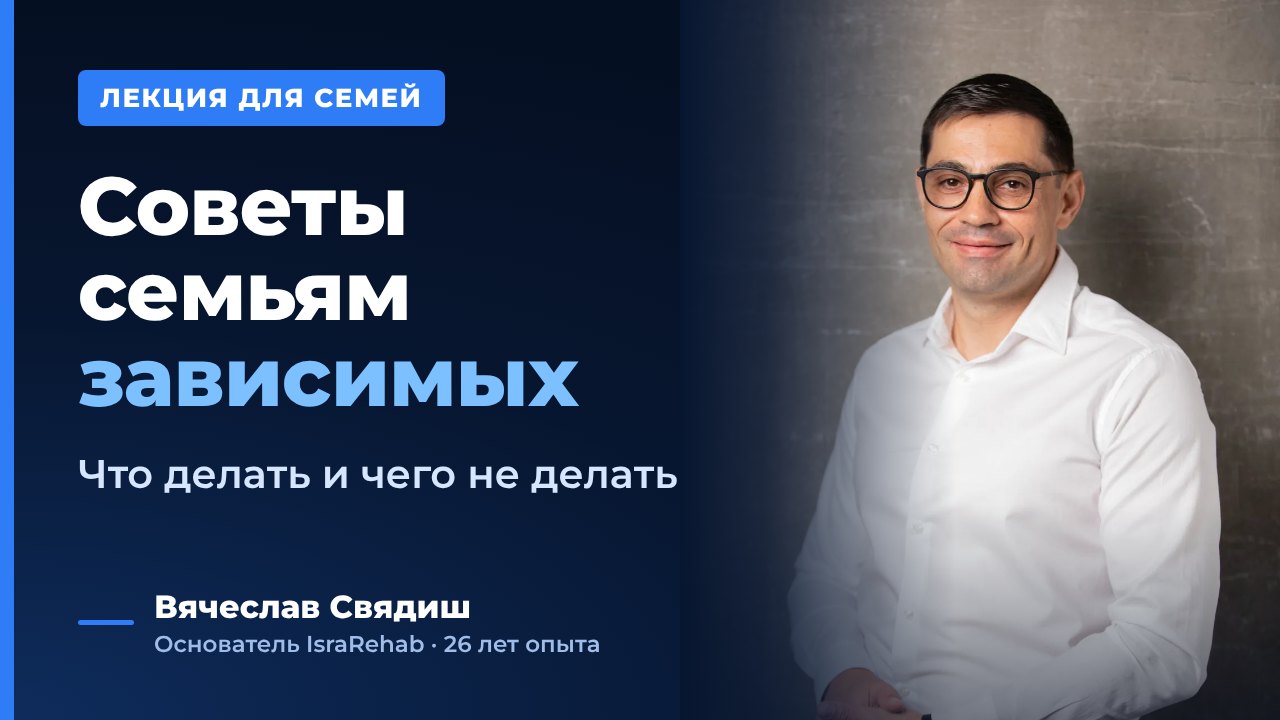 1:00:26
Lecture for families of people with addiction
Advice for families
A lecture for families of people addicted to drugs or alcohol. Viacheslav Sviadish speaks directly and without consolation: who should bear the consequences of using, why you must not live someone else’s life, and why the family needs help of its own.
Watch →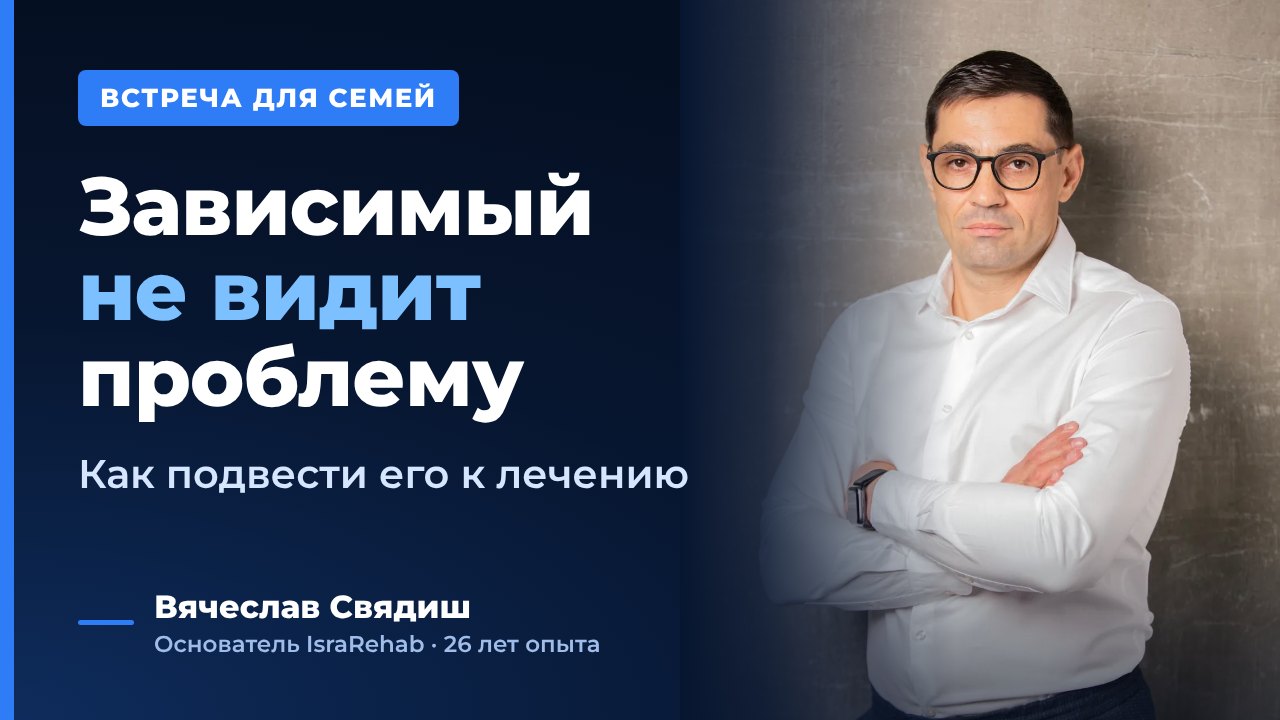 1:33:19
Online meeting for families of people with addiction
When they don’t see the problem
An online meeting for families. Using a simple “gadgets and candy” model, Viacheslav Sviadish explains why a person with addiction doesn’t see the problem, how the family sustains the illness for years, and why an intervention is not about “taking him off to treatment” but about closing every loophole and giving the person a choice.
Watch →Addictions
Alcoholism
How to recognise alcoholism in someone you love and what to do if they refuse help.
Learn more →Gambling addiction
Online casinos, betting, debts and lies: how to recognise gambling addiction and protect your family.
Learn more →Prescription drug addiction
Sleeping pills, benzodiazepines, pregabalin and painkillers: when a prescribed medicine turns into an addiction.
Learn more →Cannabis addiction
Weed, hash, marijuana: when the "soft" drug stops being soft for the person and the family.
Learn more →Cocaine and stimulants
Cocaine, mephedrone, amphetamines: an addiction that quickly hits the mind, the heart, the finances and the family.
Learn more →Opioid addiction
Heroin, methadone, fentanyl and opioid painkillers: warning signs, overdose risk and the way to recovery.
Learn more →