Why a Person with Addiction Doesn’t See the Problem and How to Lead Him to Treatment
An online meeting for families. Using a simple “gadgets and candy” model, Viacheslav Sviadish explains why a person with addiction doesn’t see the problem, how the family sustains the illness for years, and why an intervention is not about “taking him off to treatment” but about closing every loophole and giving the person a choice.
Online meeting for families of people with addiction
Videos are in Russian. Turn on subtitles (CC) → Settings → Auto-translate → English.
Timestamps
Key points in a minute
- A person with addiction lives by desires and emotions: as long as he is given everything he wants, he has no reason to stop and think or change anything.
- The habit of “give it to him, just so he leaves me alone” starts in childhood — with gadgets and sweets — and with age turns into money, housing and cover-ups.
- An intervention is the moment when the family stops giving and withstands the tantrums, pressure and manipulation instead of backing down.
- For a person to get out of the “maze,” every door must be closed except one — the exit to treatment.
- People with addiction get tired not of substances but of consequences: as long as the family deals with the consequences for them, there’s no reason to change.
- Family members need their own work: without it, the family brings the person with addiction back to the old ways again and again.
Summary
Why a person with addiction doesn’t see the problem
Viacheslav begins by explaining that a person with addiction lives by emotions and desires, not sober reasoning. There is almost no awareness, especially in those who started using as teenagers. As long as his every wish is fulfilled, he simply has no reason to think that something is wrong with his life.
Hence the “geometry” of his thinking: everything that comes into view — mom, relatives, work, relationships — the illness turns into a means of carrying on. That is why talks and persuasion hardly work: a person’s picture of the world doesn’t change until his circumstances change.
The “gadgets and candy” model
To explain the mechanism, he asks parents a simple question: what is the easiest thing to give a small child today to keep him busy? Almost everyone gives the same answer — a tablet, cartoons and something sweet. The child grows up feeling that he should get everything he wants, and the parent calls it love, though often they themselves understand they are doing something wrong.
If one day you stop giving, a tantrum begins. And most parents can’t take it — they hand the gadget back. That is how the pattern gets fixed from childhood: push hard enough and you get it. With age, only the “gadget” changes: instead of a tablet — money, an apartment, paying off debts, “we’ll help you start a business.”
What an intervention really is
An intervention, in Viacheslav’s words, is the moment when the family stops giving and withstands what follows: tantrums, pressure, manipulation and its own guilt. At that moment the person is left with a choice: look for “candy” elsewhere, or for the first time start thinking and ask himself what to do next.
He compares the life of a person with addiction to a maze with several familiar doors. For a person to get out, every door must be closed except one — the exit to treatment. Then a specialist can show him that exit and the consequences of both paths. This does not yet guarantee successful rehab, but for the first time something shifts in how he sees things. And even if a relapse happens after treatment, the process has already begun — many later return to sobriety.
Viacheslav stresses that every intervention is prepared individually and that the key is not coercion but a choice the person makes himself once the old paths are closed.
The family, the wife and the “Bermuda Triangle”
A wife or girlfriend often appears in the “person with addiction — parents” bond. She is either used in place of the mother, or through her he keeps getting the same “gadgets and candy” from his parents. She becomes a hostage to these relationships and a human shield behind which it is convenient to keep using. Breaking up such a bond is very hard.
Viacheslav asks parents an uncomfortable question: why do you need a relationship with the person with addiction at any cost? Often behind it lie guilt and the hope of “making up for” the past. But by rebuilding the relationship on the old terms, the family helps the person return to the old pattern. An example is a message from a rehab center — “send money, I need to see a doctor” — to which a parent responds immediately out of anxiety.
A participant’s experience: coercion and choice
In the second part, a group participant who has been through addiction himself joins the conversation. The first time, he was taken to treatment against his will. Back then he didn’t see the problem, felt only resentment toward his family, “went along with it,” and on the day he got out he started drinking again.
The turning point came when his mother stopped giving him money and “shut off” all the familiar routes. After talking with a specialist, he chose treatment himself — a different center and a different format. The second time he experienced rehab completely differently: without resentment, because it was his choice. The scariest part, he says, turned out to be learning to take responsibility for his own life — before, his mother had made all the decisions for him. After treatment he did not go back to his former unhealthy relationships: they would have pulled him back in.
Takeaway: family members need their own work
Viacheslav sums up: people with addiction think in similar ways, and if the family consistently holds the chosen line, the likelihood that the person will agree to treatment is high. But holding that line is very hard for family members — many believe they already know everything and step on the same rake again.
That is why he advises investing in yourself: therapeutic groups, work with a specialist, the ability to hold boundaries. It is cheaper and more useful than paying for one rehab after another. He answers parents’ questions at the end in the same spirit: after rehab, a person first needs to rebuild himself, and an apartment with no obligations lowers his sense of responsibility.
The summary is based on the recording and retells the main ideas in our own words. The video reflects the author's personal experience and views; it is not medical advice. Viacheslav Sviadish is an addiction recovery specialist, not a doctor.
Frequently asked questions
Why doesn’t a person with addiction see his own problem?
As long as all his wishes are fulfilled and the family deals with the consequences, he has no reason to think about it. The illness turns everything around him into a means of continuing to use, so persuasion barely changes his picture of the world.
What is an intervention in addiction?
It is a prepared step by the family and a specialist, after which loved ones stop providing the familiar life of the person with addiction and withstand the pressure. The person is left with a choice, and the specialist shows him the path to treatment. Every intervention is prepared individually.
Does it help to take someone to treatment by force?
In the experience discussed at the meeting, coercion often causes resentment and resistance: the person “goes along with it” and relapses after leaving. It is far more reliable when he chooses treatment himself because the old paths are closed.
Should I give my son an apartment after rehab?
Viacheslav advises caution: when housing is given with no obligations, a person often stops paying and taking responsibility for himself. The decision depends on how independent he is, and it’s best discussed with a specialist.
Recognise your situation?
The first consultation is free. Tell us what is happening and we will work out where to start in your case.
More videos
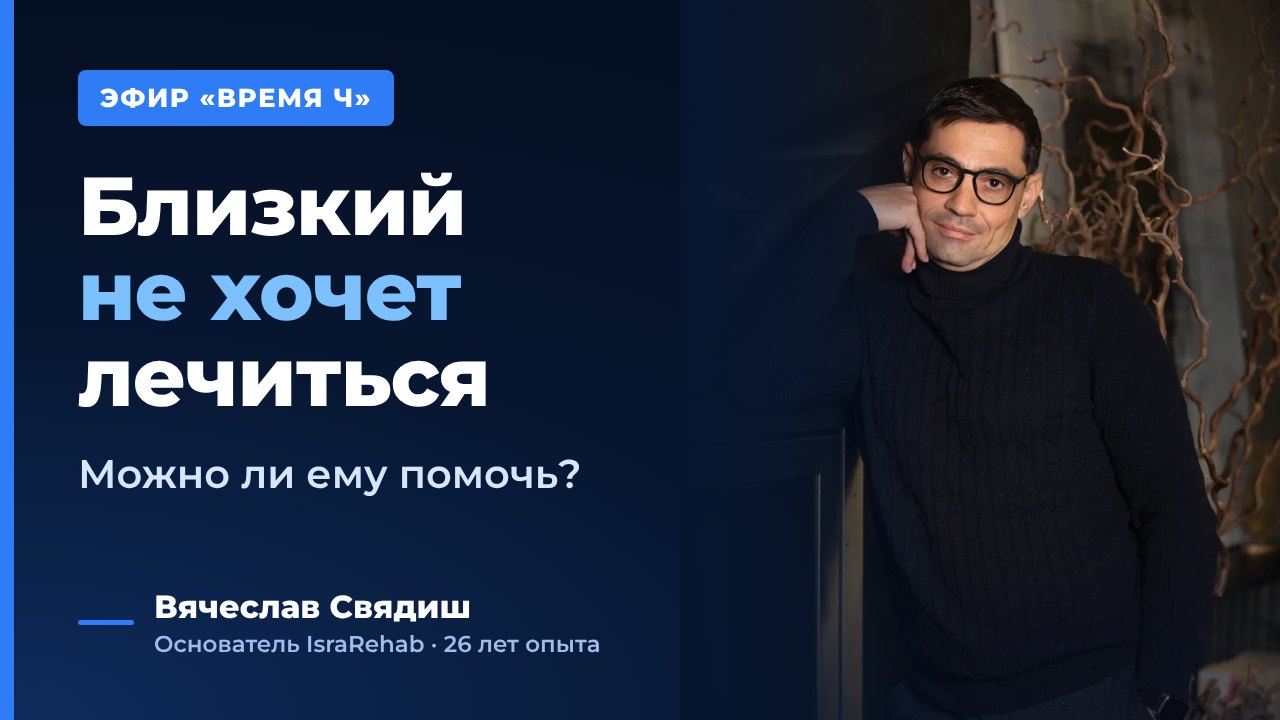 23:40
“Vremya Ch” radio show, Radio Freedom FM 104.7 (New York)
He doesn’t want treatment
A broadcast about the most common situation: the family is in despair, but the person himself doesn’t want treatment. Viacheslav Sviadish explains why a person with addiction doesn’t see the problem, why the key to change lies with the family, and what really helps nudge someone toward the first step.
Watch →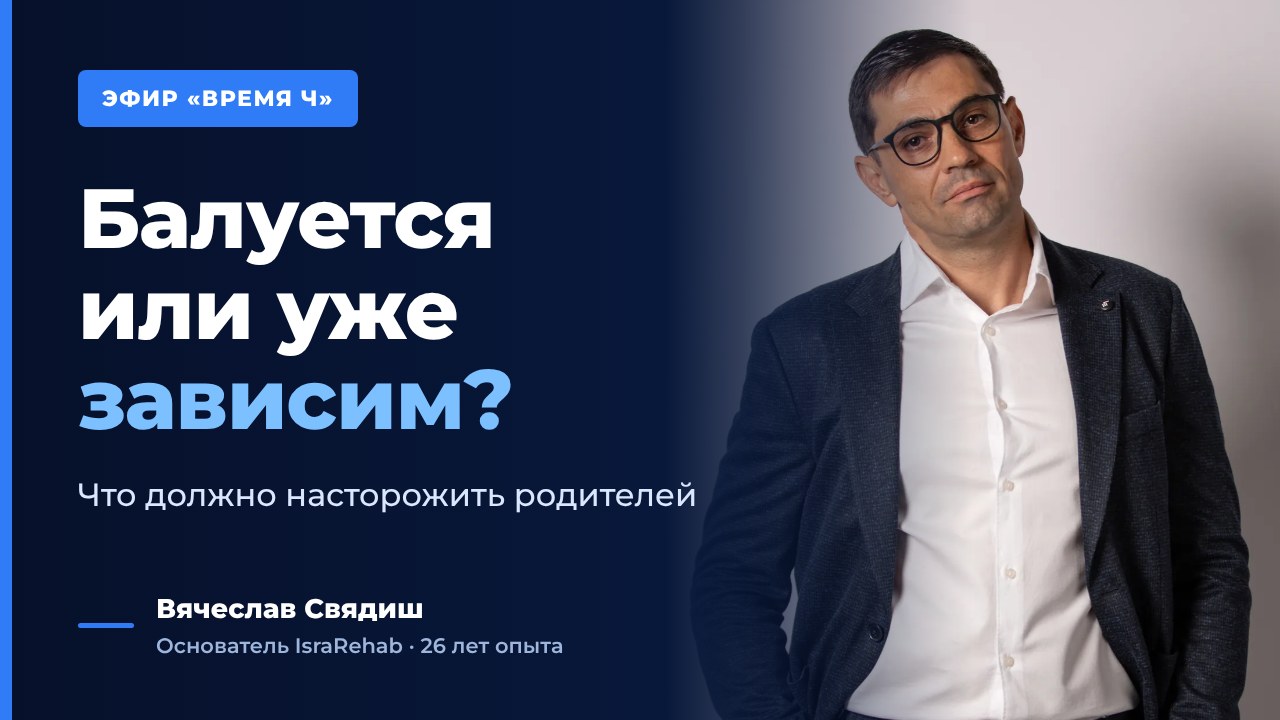 19:52
“Vremya Ch” radio show, Radio Freedom FM 104.7 (New York)
Fooling around or addicted?
The first broadcast in a series about addiction in New York’s Russian-speaking community. Viacheslav Sviadish talks about who is at risk, the danger of “legal” weed of unknown quality, which signs should alert parents, and why help is needed not only by the person with addiction but by the whole family.
Watch → 23:29
Radio show, Davidzon Radio (New York)
How treatment works at IsraRehab
A radio interview recorded against the backdrop of news about fentanyl deaths. Viacheslav Sviadish explains why IsraRehab relies on long-term treatment far from home, what determines the length of the program, what the aftercare program in the US offers and why the family has to step in first.
Watch →