He doesn’t want treatment — so there’s no way to help?
A broadcast about the most common situation: the family is in despair, but the person himself doesn’t want treatment. Viacheslav Sviadish explains why a person with addiction doesn’t see the problem, why the key to change lies with the family, and what really helps nudge someone toward the first step.
“Vremya Ch” radio show, Radio Freedom FM 104.7 (New York)
Videos are in Russian. Turn on subtitles (CC) → Settings → Auto-translate → English.
Timestamps
Key points in a minute
- Help is most often sought not by the person with addiction but by the family — when there is addiction in a family, it’s everyone’s misfortune.
- A person in addiction lives in an “invented world”: he feels he’s in control of everything and that nothing will happen to him.
- “Why do good swimmers drown? Because they’re sure they won’t” — people think the same way about overdoses and drinking binges.
- When relatives know what to do and how to behave, there’s a chance to nudge the person toward at least the first steps.
- The most motivating thing is a conversation with someone who has walked this path himself and speaks his language.
- Shame and silence only make things worse. You can ask for advice anonymously.
Summary
Who really seeks help
The broadcast is dedicated to the support line for families that Viacheslav opened together with the host, Mikhail. The first thing he notes: it’s mostly relatives who reach out, not the people with addiction themselves. When there is addiction in a family, it’s the whole family’s misfortune: the parents don’t know where to go or what to do, while the person lives who knows where, uses and doesn’t want to change anything.
Hence the hopelessness. Many services give the same answer: “If he doesn’t want treatment, there’s nothing we can do.” But the family can still do a lot — if it knows how to act.
Why he doesn’t see the problem
A person in addiction lives not in the real world but in an invented one. The substance gives a feeling of omnipotence: it seems everything is under control and nothing will happen to you. That’s exactly why people die of overdoses — they simply don’t think it could happen to them.
Viacheslav compares this to good swimmers: it’s not those who can’t swim who drown, but those who are sure they won’t. The person who “just drinks on weekends” reasons the same way — until the problem knocks on the door. Today the market itself adds to this: most drugs are chemical, and they cause irreversible damage to the nervous system.
Why the family is the key to change
Motivating a person who lives in his own “picture of the world” is very hard. That’s why, according to Viacheslav, the relatives are the fundamental factor. When the family is “fully equipped” — knows what to do, how to behave, which words to use — there’s a chance to nudge the person toward at least the first steps.
Such a moment will definitely come: he will need something from his parents and will send a message. And a parent who knows in advance where to direct him can simply forward him a contact. One call can change a life — for example, bring the person to detox at the very moment he’s ready for it.
Who can get through to him
The best motivator is someone who has been through it himself: “I was just like you, I know that high, and here’s what happened to me.” Parents often don’t speak the same language as their children with addiction — even when they speak Russian. But someone who was once “in the same picture” knows what to talk about, and it’s easier to believe him.
Viacheslav adds: it’s not only about language, but about being understood. People from the same culture also understand the parents — their shame, their fear, their wish not to “wash their dirty linen in public.”
Don’t stay silent
Many parents are embarrassed and pretend nothing is happening — and in doing so make things worse. Viacheslav speaks to them directly: there’s nothing to be ashamed of; you can ask for advice anonymously, under any name. Knowing what to do, where to turn and how to act in an emergency is a kind of antidote: it can save a life.
The summary is based on the recording and retells the main ideas in our own words. The video reflects the author's personal experience and views; it is not medical advice. Viacheslav Sviadish is an addiction recovery specialist, not a doctor.
Frequently asked questions
My loved one doesn’t want treatment. Can anything be done?
Yes. Start with the family: when relatives know how to behave and what to say, they have a real chance of nudging the person toward the first steps. In difficult cases, a well-prepared intervention helps.
Why doesn’t a person with addiction admit the problem?
Addiction changes perception: the person lives in an illusion of control and is sure nothing bad will happen to him. This is part of the illness, not just stubbornness.
I’m ashamed to talk about the problem. Can I reach out anonymously?
Yes, you can ask for advice without giving your name. Silence usually only makes things worse.
Recognise your situation?
The first consultation is free. Tell us what is happening and we will work out where to start in your case.
More videos
 19:52
“Vremya Ch” radio show, Radio Freedom FM 104.7 (New York)
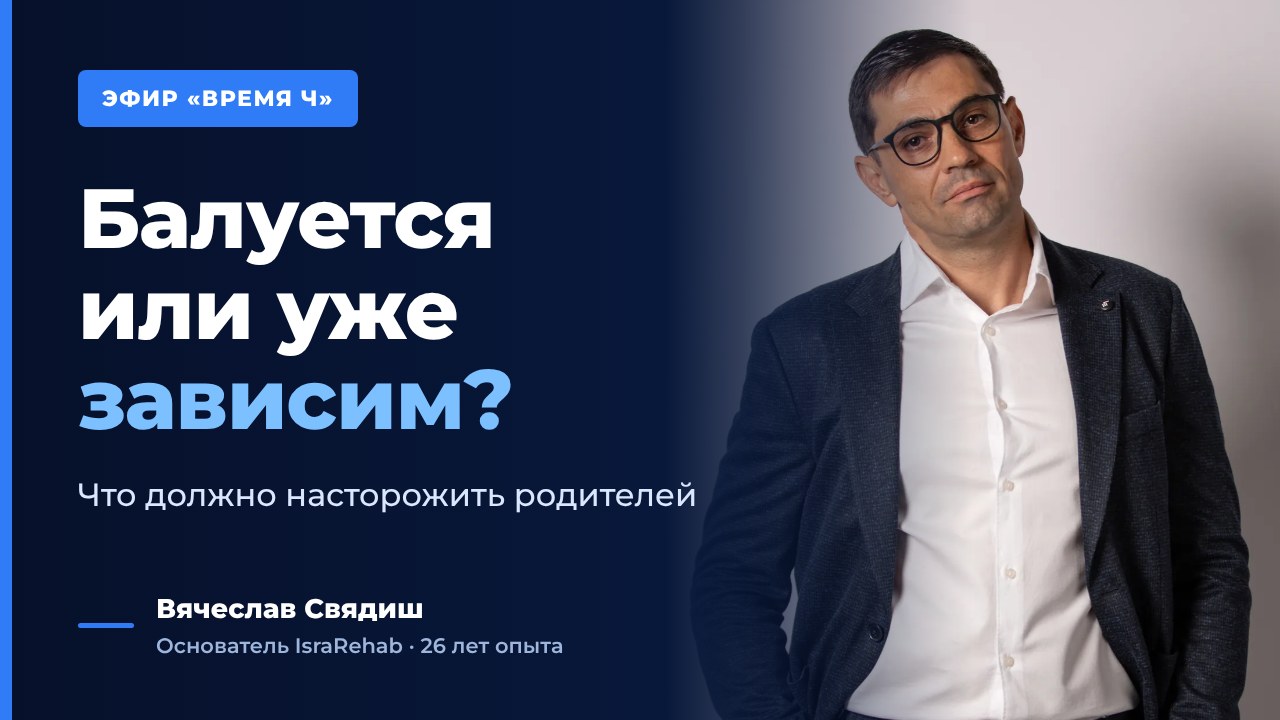
Fooling around or addicted?
The first broadcast in a series about addiction in New York’s Russian-speaking community. Viacheslav Sviadish talks about who is at risk, the danger of “legal” weed of unknown quality, which signs should alert parents, and why help is needed not only by the person with addiction but by the whole family.
Watch →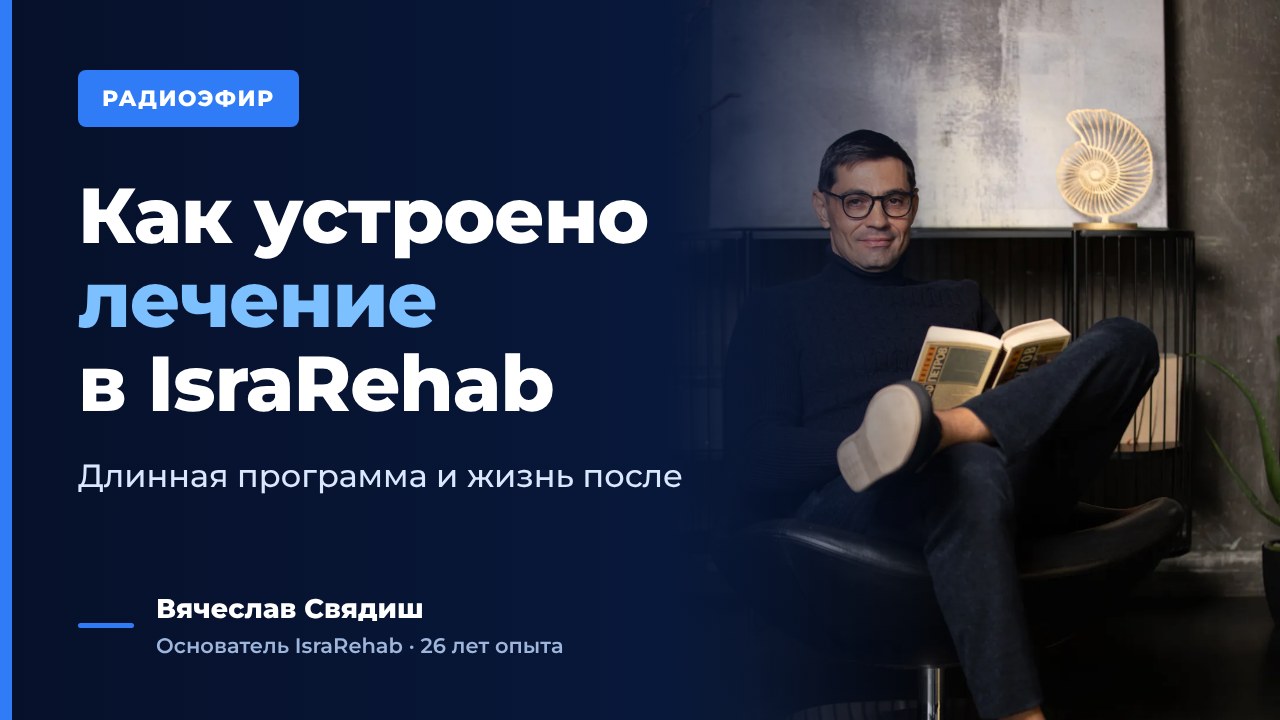 23:29
Radio show, Davidzon Radio (New York)
How treatment works at IsraRehab
A radio interview recorded against the backdrop of news about fentanyl deaths. Viacheslav Sviadish explains why IsraRehab relies on long-term treatment far from home, what determines the length of the program, what the aftercare program in the US offers and why the family has to step in first.
Watch →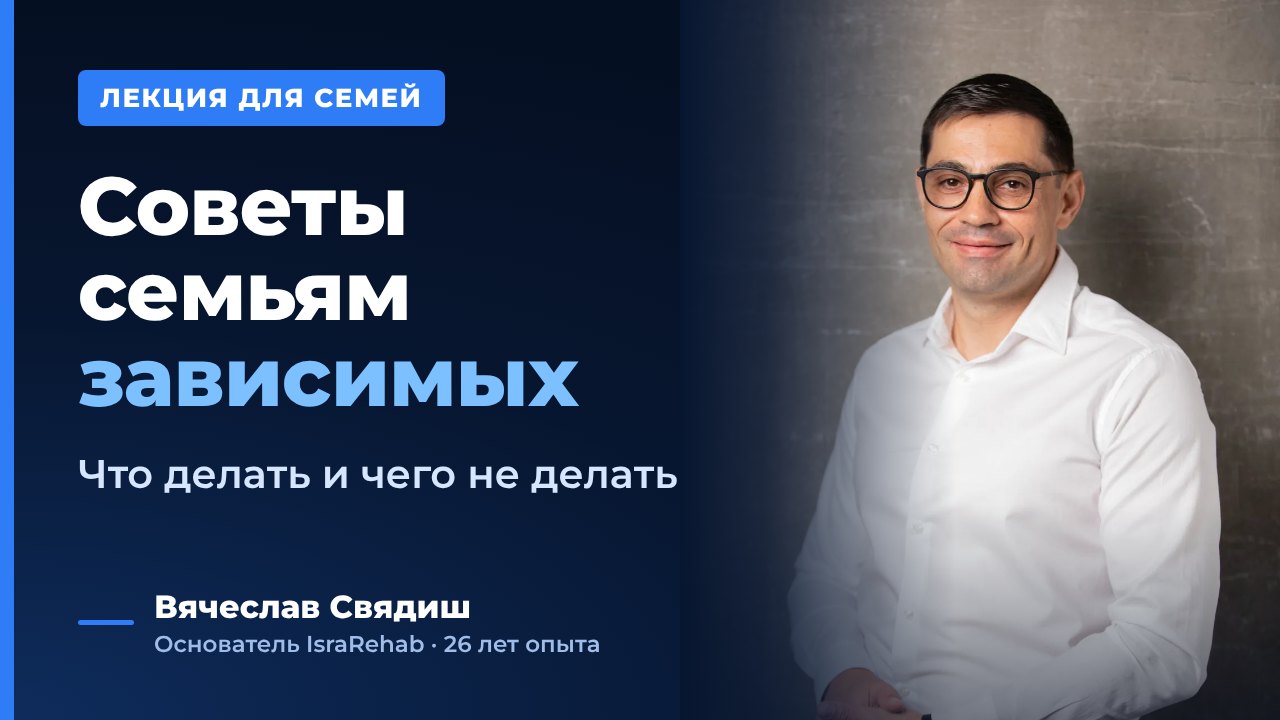 1:00:26
Lecture for families of people with addiction
Advice for families
A lecture for families of people addicted to drugs or alcohol. Viacheslav Sviadish speaks directly and without consolation: who should bear the consequences of using, why you must not live someone else’s life, and why the family needs help of its own.
Watch →